A guided setup, step by step
Nine short programs walk a student through setting up the robot, from checking every motor to tuning each shot, and each one remembers what the last one found.
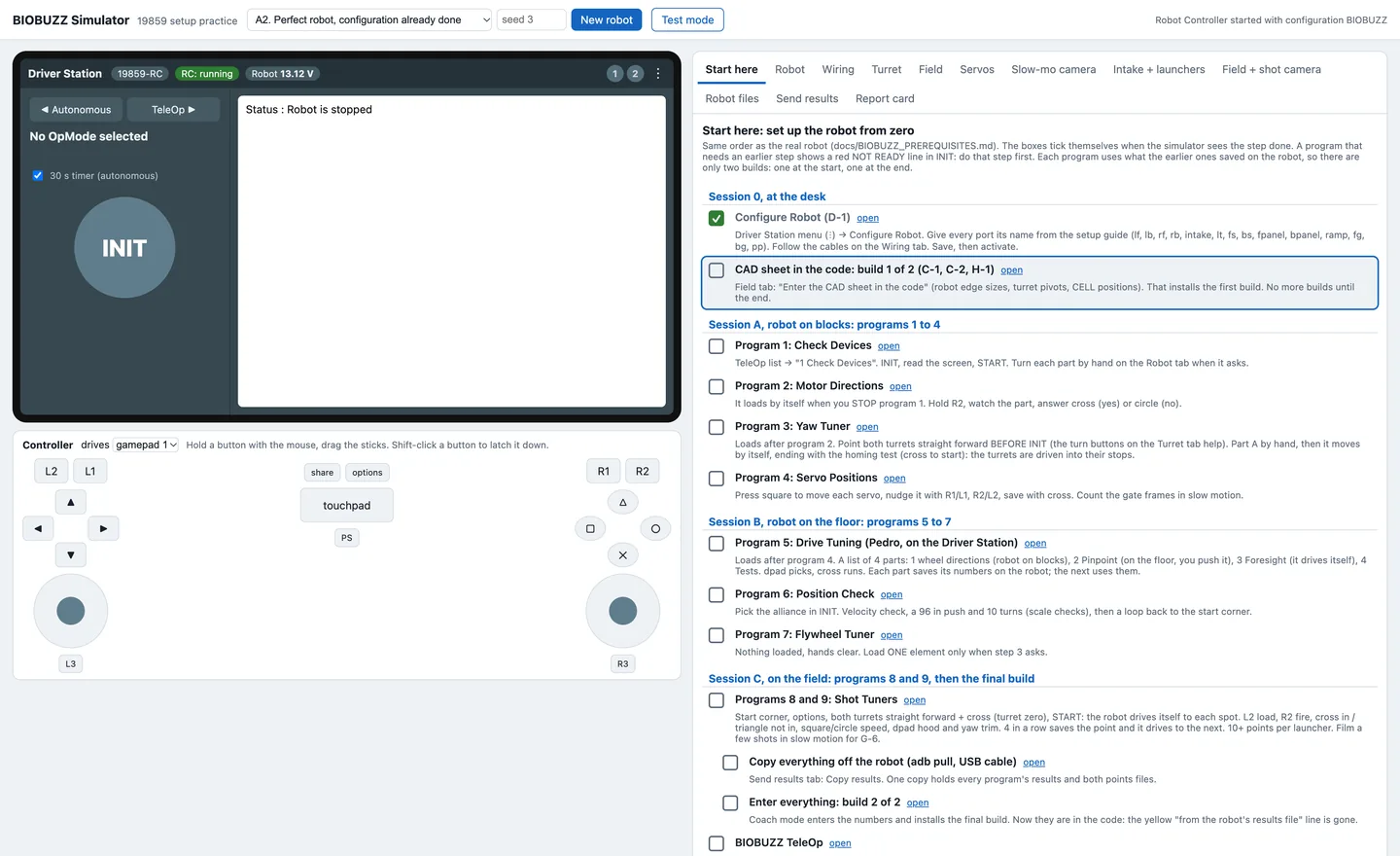
The team's robot code, plus a browser simulator that runs that exact code on a virtual robot, so setup and tuning can be practised before the robot exists.
Our team's BIOBUZZ robot is not built yet, but its code is. This project lets us practise anyway: it runs our real robot code on a virtual robot in the browser, so every setup and tuning step can be rehearsed before the real robot exists.
BIOBUZZ is the FTC game in which robots collect game elements and shoot them into goals. Our robot has two shooters, so tuning it by hand is long and easy to get wrong.
Nine short programs walk a student through setting up the robot, from checking every motor to tuning each shot, and each one remembers what the last one found.
Measured shots are smoothed into a table the robot can trust between the points we actually tested.
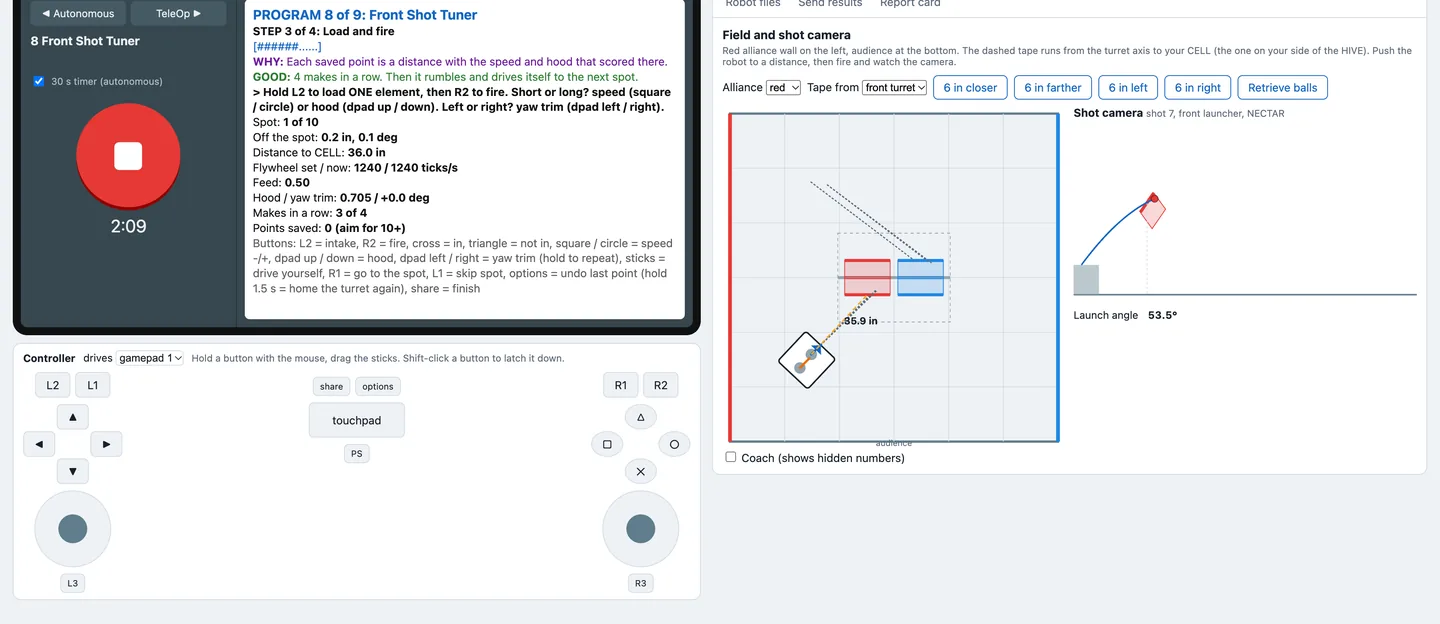
Twenty-one built-in faults, such as a reversed motor, let students learn to spot and fix mistakes before they cost a match.
With tuning done, both of our autonomous routines score 16 of 16 shots in the simulator and finish with time to spare. That is proven in simulation only; the real robot comes next.
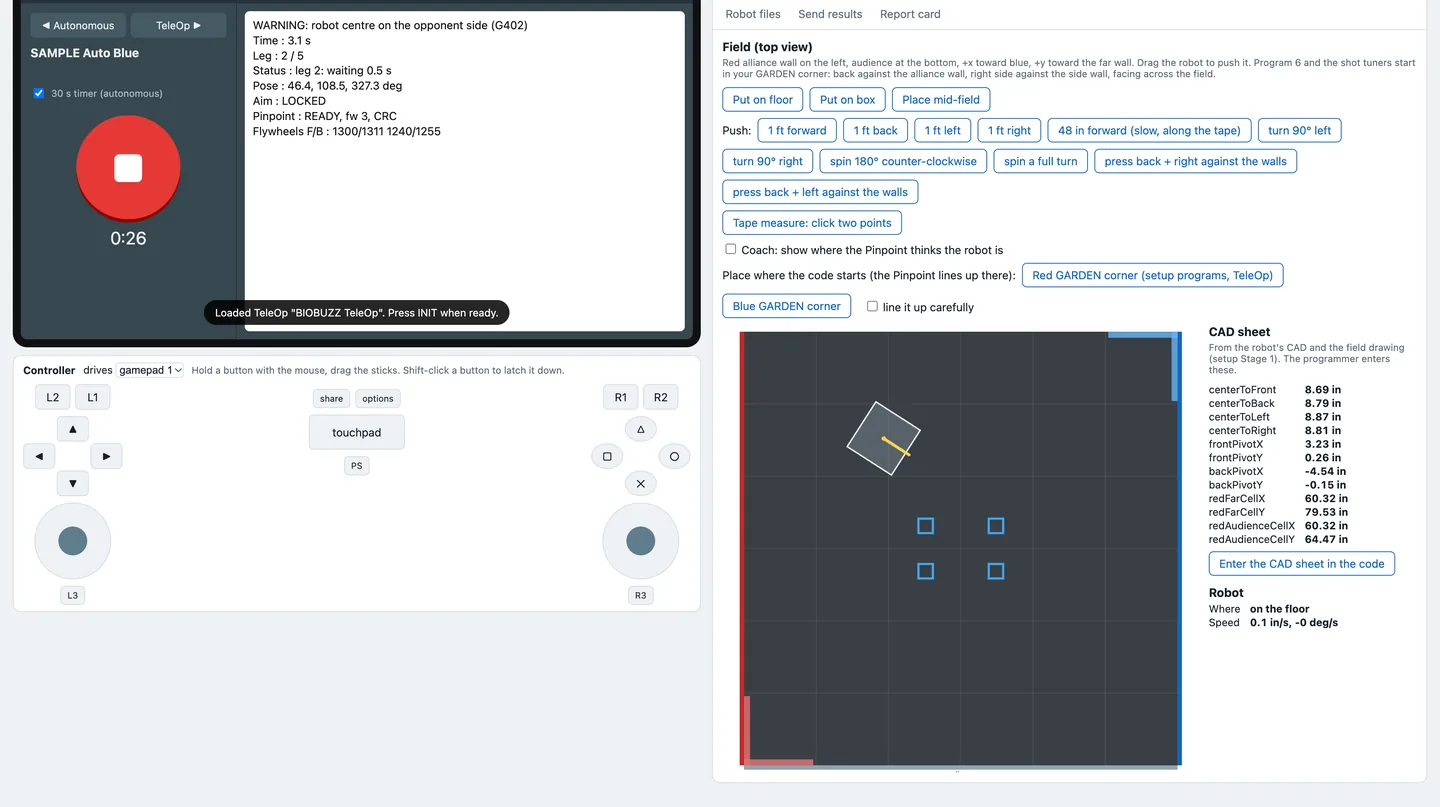
Waiting for the robot would have pushed all of the tuning into the last weeks before competition. Running our real code on a virtual robot first means mistakes show up while they are still cheap to fix.
Tuning a two-turret shooter is long and easy to get wrong. Splitting it into nine short programs, each using what the last one found, turned it into something any student on the team can follow.
Sixteen of sixteen shots in the simulator is a strong start, not the finish. Saying clearly that the real robot is still pending is part of reporting the result honestly.